
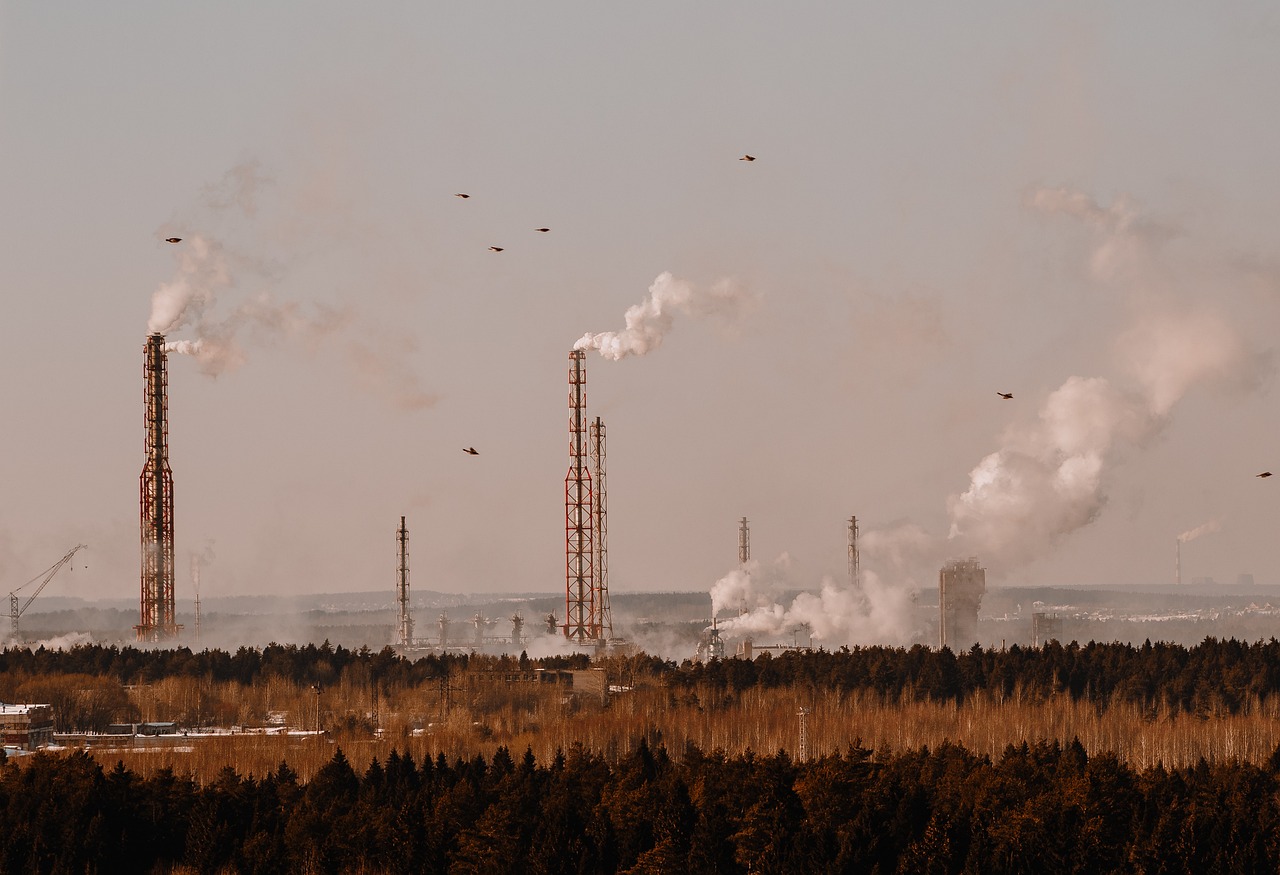

For more than ten years, the city of Karaganda has faced consistently high, and often very high levels of air pollution. Over half a million residents are exposed to air contaminated with fine particulate matter, hydrogen sulfide, and other harmful chemical compounds. In 2024 alone, the city recorded more than 46,000 instances of pollutants exceeding permissible concentrations – 14,000 more than in Almaty, Kazakhstan’s largest metropolis, infotabigat.kz reports.
According to the Project Office for Central Asia on Climate Change and Green Energy, Karaganda is the fifth most populous city in Kazakhstan, with a population exceeding 500,000. It remains one of the nation’s key industrial centers, home to a major territorial-industrial complex dominated by heavy industry.
The local climate, typical of Northern and Central Kazakhstan, is sharply continental, marked by severe winters, moderately hot summers, and low annual precipitation — conditions that contribute to persistent air stagnation and poor dispersion of pollutants.
Main Sources of Pollution
The city’s primary sources of atmospheric pollution include thermal power plants, coal mining enterprises, and emissions from private households. Approximately 25,000 homes rely on solid-fuel stoves for heating, consuming an estimated 290,000 tonnes of coal each heating season.
Air Quality Monitoring
Air quality in Karaganda is monitored at seven permanent observation stations:
-
Four manual sampling stations collect air samples four times daily to analyze eight pollutants, including dust, sulfur dioxide, nitrogen dioxide, carbon monoxide, phenol, formaldehyde, nitric oxide, and arsenic.
-
Three automated monitoring stations record data every 20 minutes on nine key parameters: PM2.5, PM10, sulfur dioxide, carbon monoxide, nitrogen dioxide, nitric oxide, hydrogen sulfide, ammonia, and gamma radiation levels.
Air Quality Indices
Two key indices are used to evaluate the city’s air quality:
-
Air Pollution Index (API) — a composite measure reflecting average daily or annual concentrations of major pollutants and their long-term impact on human health.
-
Standard Index (SI) — based on the highest single recorded concentration of a pollutant relative to its Maximum Permissible Concentration (MPC). This index identifies the most hazardous pollutants and helps assess short-term pollution peaks.
According to Kazhydromet, Kazakhstan’s national hydrometeorological service, Karaganda’s API was rated as “high” from 2015 to 2022, and “very high” in 2023. In 2024, the city’s air quality remained at a “very high” level based on the Standard Index.
Exceedances and Key Pollutants
In 2023, concentrations of particulate matter exceeded permissible limits by up to 22.6 times for PM2.5 and 12.1 times for PM10. In 2024, these exceedances rose even higher — 26.6 times for PM2.5 and 14.2 times for PM10. The high concentrations are largely attributed to extensive coal combustion in both industrial facilities and private heating systems.
Throughout 2024, monitoring stations recorded 46,256 exceedances of maximum permissible concentrations, with the majority linked to particulate matter (PM2.5 and PM10) and hydrogen sulfide. Elevated levels of carbon monoxide, nitrogen dioxide, phenol, and ozone were also detected.
The upcoming Regional Ecological Summit, scheduled for April 22–24, 2026, in Astana, will address pressing environmental challenges in Central Asia. The high-level forum, featuring international experts, will focus on practical strategies and collaborative solutions for improving air quality and promoting sustainable development across the region.