
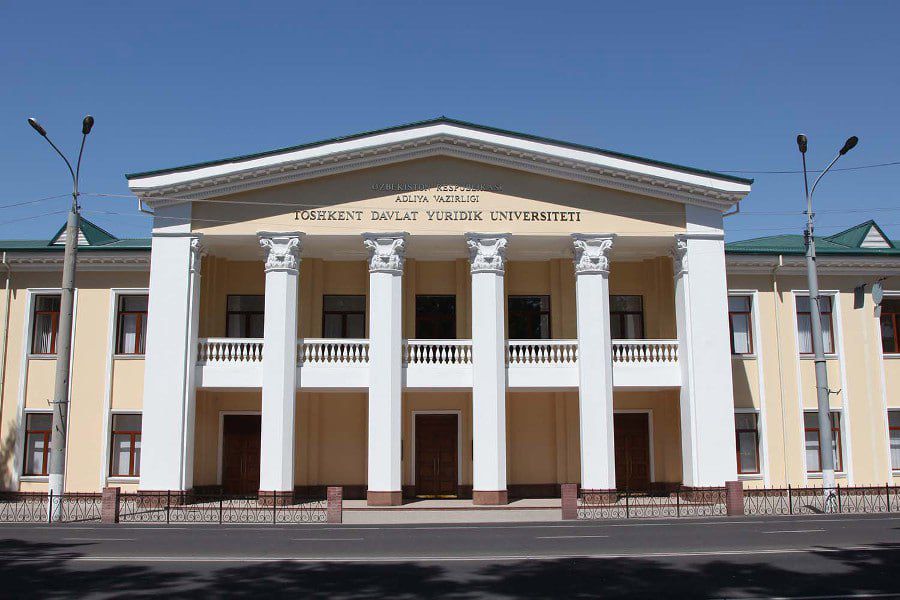

As universities around the world strengthen their role in promoting sustainability, higher education institutions in Uzbekistan are also taking important steps toward building environmentally responsible campuses. One of the country’s leading institutions in this direction is the Tashkent State University of Law (TSUL), which is actively integrating ecological values into its academic programs, governance structures, and student life.
TSUL’s lecturers highlight that the university is consistently working to develop an eco-friendly academic environment, advance sustainable development initiatives, and contribute to both national and global efforts in addressing climate change. Their insights reflect TSUL’s growing experience in promoting sustainability across various spheres of university life and its commitment to preparing environmentally conscious legal professionals.
Below are their articles, which present TSUL’s perspectives, achievements, and ongoing initiatives in the field of ecological and sustainable development.
General Overview of Tashkent State University of Law: Mission, Academic Profile, and Institutional Development – Sarvinoz Sunnatillaeva, Lecturer of International Law and Human Rights department:
Tashkent State University of Law (TSUL) is the leading higher legal education and research institution in Uzbekistan, committed to preparing highly qualified legal professionals capable of contributing to national and global development. Our mission is to cultivate legal specialists with strong analytical skills, modern professional competencies and a deep understanding of the rule of law.
Over the past decade, TSUL has undergone significant institutional transformation. The university expanded its academic programs, enhanced international cooperation, integrated digital learning technologies, and strengthened its research capacity. Today, TSUL offers bachelor’s, master’s, and doctoral programs, as well as specialized training in areas such as international law, environmental law, human rights, public administration, and emerging fields related to technological development.
Institutionally, TSUL prioritizes student-centered education, academic integrity, and innovative approaches to learning. The university’s infrastructure, including modern lecture halls, digital libraries, research centers, legal clinics, and moot court rooms, supports quality education and prepares students for the demands of contemporary legal practice.
Key Initiatives and Mechanisms for Advancing Sustainable Development at TSUL – Munisa Rayimova, Lecturer of International Law and Human Rights Department:
Tashkent State University of Law (TSUL) advances sustainable development through a coordinated strategy that integrates institutional reforms, digital transformation, international cooperation, and student leadership. Guided by its Climate Action Policy, the university reduces paper consumption, improves energy efficiency, and adopts digital governance tools such as smart classrooms, e-learning platforms, and electronic document circulation.
TSUL also implements a Sustainable Procurement Policy, prioritising environmentally friendly goods and services, waste reduction, and recycling practices—including collaboration with government enterprise “Makhsustrans” for composting organic waste. International partnerships with UNESCO, UNDP, OSCE, and foreign universities support joint projects, capacity-building, and the exchange of best practices in green governance.
Students contribute through the Student Society for Sustainability, environmental clubs, green volunteer actions, awareness campaigns, and moot courts on environmental and human rights topics. These initiatives help embed SDG-aligned responsibility and climate awareness across the campus.
Together, these mechanisms are shaping TSUL into an ecologically responsible and socially engaged university.
TSUL’s Institutional Policy Framework on Climate Change and Sustainable Development – Shoira Alamonova, Lecturer of International Law and Human Rights Department:
TSUL has developed a clear institutional framework integrating climate action and sustainable development across governance, operations and academic culture. The university’s Climate Action Policy formally commits to reducing its environmental impact through energy-efficient infrastructure, sustainable campus management and a shift to digital governance, stating that the university will track its emissions and aim to meet decarbonisation targets by 2050. The university is committed to energy-efficient infrastructure, responsible resource management, and a full transition to paper-free administrative processes. Solar energy installations, LED lighting upgrades, and waste-segregation systems further reinforce these commitments.
Academically, TSUL integrates sustainability through courses in environmental law, climate governance, ecological justice, and water law. The university supports faculty and student research on climate litigation, environmental rights, and green-economy regulation, and regularly organises conferences, workshops, and interdisciplinary dialogues.
Student-led initiatives—environmental clubs, climate awareness campaigns, and moot courts—play a central role in advancing climate literacy and civic responsibility. These combined efforts allowed TSUL to achieve strong results in sustainability rankings, including high placement in the UI GreenMetric and THE Impact Rankings.
TSUL’s institutional model thus unites governance, academic development, and student engagement into a single sustainability framework.
Incorporation of Environmental and Climate Issues into TSUL’s Academic Agenda – Asilbek Muminov, Lecturer of International Law and Human Rights Department:
TSUL recognises the urgency of environmental and climate challenges facing Uzbekistan – from the Aral Sea disaster and Central Asia’s water scarcity to urban air pollution and sustainable agriculture – and ensures that its legal education addresses these realities. By embedding environmental themes throughout its curriculum, TSUL equips future legal professionals to engage in sustainable development and climate resilience. The university has introduced dedicated courses on environmental law, climate governance and sustainable development regulations and uses cross-disciplinary integration: in Constitutional Law students examine the right to a healthy environment; in Human Rights Law they explore how environmental degradation violates rights; in Criminal Law they analyse environmental crime and enforcement mechanisms.
TSUL organizes guest lectures, workshops, and roundtables featuring environmental law experts and international organization representatives. The university encourages faculty to incorporate case studies and practical exercises, such as analyzing environmental impact assessments or simulating negotiations on transboundary water disputes. TSUL actively encourages faculty and students to conduct research on environmental law, climate governance, and sustainable development. Faculty members publish articles on climate litigation, environmental justice, water law in Central Asia and legal aspects of renewable energy development.
The university is building a legal education system responsive to the environmental realities of the 21st century one capable of producing graduates who will shape a more sustainable and just future for Uzbekistan and the world.
TSUL’s contribution to Environmental Law Scholarship and Research – Umid Sobirov, Lecturer of Constitutional Law Department:
Tashkent State University of Law places significant emphasis on fostering high-quality research in environmental law and related fields, recognizing the crucial role of scholarship in advancing sustainable development and ecological governance. Over recent years, several of our scholars have successfully defended PhD theses addressing pressing legal issues in environmental protection, climate governance, and sustainable development.
For instance, Akhrorov Adkhamjon examined “Legal Regulation of the Activities of Specialized State Authorities in the Field of Ecology”, contributing to the understanding of administrative law mechanisms that ensure effective ecological governance. Nishonov Abdulloh focused on “Legal Ensuring of Environmental Safety in the Use of Nuclear Energy”, a highly relevant topic for Uzbekistan given the country’s plans to construct nuclear power plants. Nurullayev Shoxrux studied “Legal Protection of the Environment in the Construction Sector”, which is particularly significant amid Tashkent’s ongoing urban redevelopment and the city’s current challenges in air quality, highlighting the legal dimensions of mitigating construction-related environmental impacts.
These research achievements reflect TSUL’s commitment to integrating scholarly expertise into both academic instruction and practical policy recommendations. By training legal professionals who are capable of addressing complex ecological and environmental issues, TSUL actively contributes to national and international efforts toward sustainable development, climate protection, and the promotion of environmental justice.
International Rankings and Achievements of TSUL in the Field of Sustainability and Social Responsibility – Azizbek Toyirov, Lecturer of International Law and Human Rights Department:
Tashkent State University of Law (TSUL) continues to strengthen its international standing through notable achievements in global rankings, particularly in areas related to sustainability, social responsibility, and innovative institutional development. The university’s recent success in the World University Rankings for Innovation (WURI) demonstrates its commitment to creating a socially responsible, student-centered, and forward-looking educational environment.
In the 2025 WURI rankings, TSUL achieved 16th place in the category of Student Services and Student Engagement, placing it among the TOP-20 most innovative universities worldwide. This recognition reflects the university’s efforts to enhance student well-being, expand access to inclusive educational services, and actively involve students in socially significant initiatives. Such achievements directly contribute to the university’s broader sustainability goals by fostering an engaged, responsible, and socially active student community.
TSUL also ranked 54th in the Prospective Leadership category, entering the TOP-100 institutions that demonstrate strategic vision, ethical leadership, and long-term sustainability planning. This result highlights the university’s capacity to anticipate societal needs and develop institutional policies aligned with global trends in social responsibility, governance, and sustainable development.
In the overall global ranking, TSUL was placed at 163rd among the Global Top 400 Most Innovative Universities, rising by 20 positions compared to the previous year. This upward movement illustrates the university’s consistent progress in innovation-driven reforms, impactful research, and community engagement.
Authors: Sarvinoz Sunnatillaeva, Rayimova Munisa,Shoira Alamonova, Asilbek Muminov, Umid Sobirov, Azizbek Toyirov
Photo: tsul.uz